A vehicle can be running well, have a current inspection from another state, and still create a registration problem after it arrives in California. For out-of-state vehicle smog in California, the question is not simply whether the car has low emissions. California also considers the vehicle’s emissions certification, model year, mileage, and registration status.
That distinction matters when you are transferring an out-of-state title, moving to California, or buying a vehicle from another state. A California Smog Check is often part of the DMV registration process, but it is not the only requirement. Knowing what to verify before you pay for repairs, testing, or transportation can prevent costly delays.
Out of State Vehicle Smog California Rules Start With Registration
When an out-of-state vehicle is brought into California for registration, the DMV generally requires a California smog certification unless the vehicle qualifies for an exemption. An inspection or emissions certificate from your prior state does not replace California’s requirement.
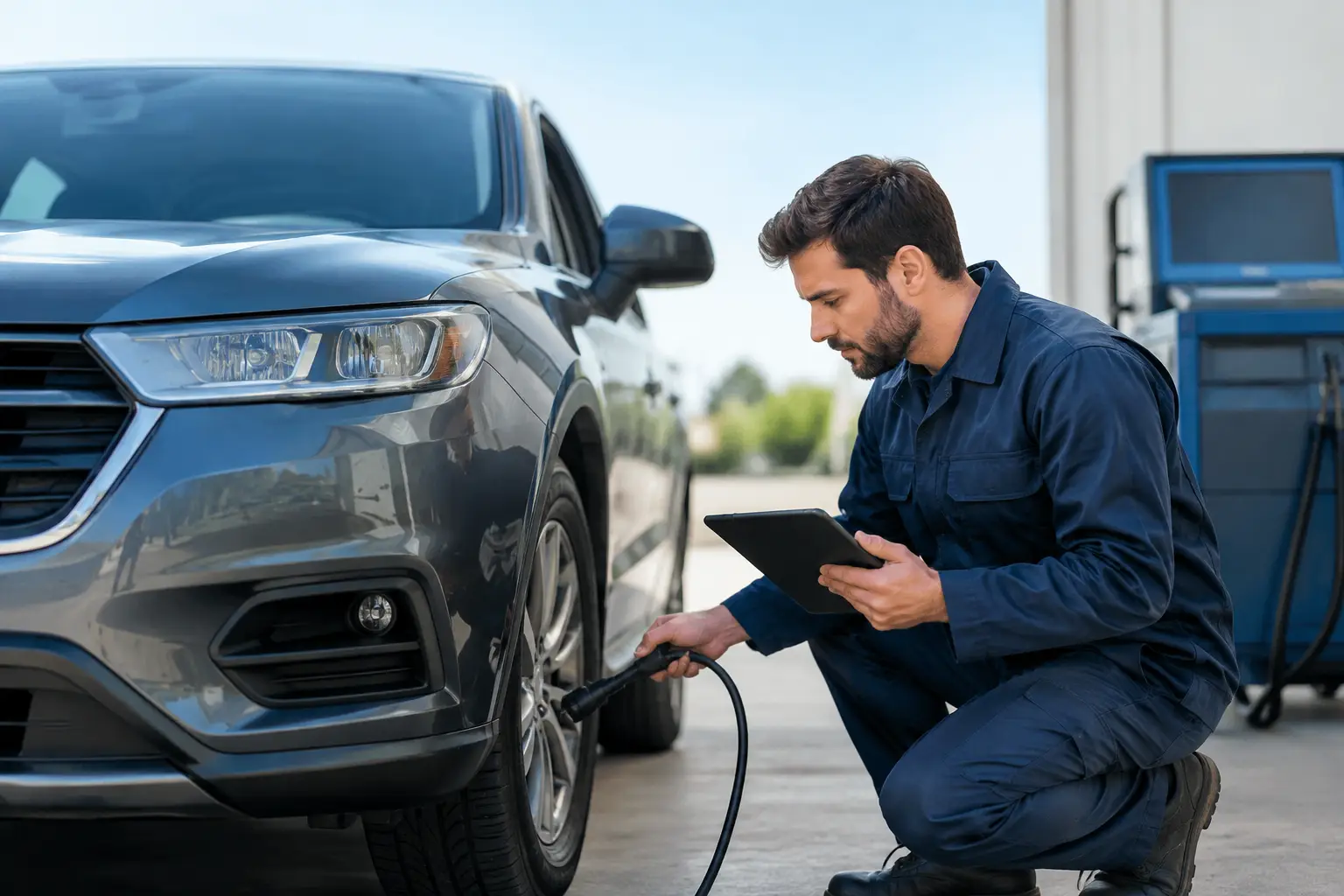
For many gasoline-powered vehicles, a California-licensed Smog Check station performs the required inspection. The test result is transmitted electronically to the DMV, so owners normally do not need to carry a paper certificate. However, a passed test does not by itself guarantee registration approval. The DMV may still need to verify ownership documents, the vehicle identification number, fees, and the vehicle’s eligibility for California registration.
The order of operations can depend on your situation. Some owners begin with a DMV visit or online transaction and receive direction on whether a smog inspection is needed. Others confirm the vehicle’s status first, then complete the test before submitting registration paperwork. If there is uncertainty about the vehicle’s emissions label or an exception, checking first is usually the better path.
California Emissions Certification Can Matter More Than the Test
California has stricter vehicle emissions requirements than many states. A vehicle originally built for sale outside California may have a federal emissions label rather than a California emissions label. This is often found under the hood, on the emissions control information sticker.
For a California resident who purchases or obtains a vehicle outside the state, the 7,500-mile rule is a major consideration. California generally restricts registration of newer vehicles acquired out of state if they do not meet California emissions standards and have fewer than 7,500 miles. There are exceptions, but they are fact-specific and should not be assumed.
A vehicle with more than 7,500 miles may be eligible for registration even if it was not originally certified for California sale, provided it meets the applicable requirements. It may still need to pass a California Smog Check. This is why a vehicle can be eligible to register but still fail its emissions inspection, or pass an inspection while presenting a separate documentation issue.
The rule applies differently depending on how the vehicle came into your possession. A recently purchased vehicle, an inherited vehicle, a military-related move, and a vehicle you owned before relocating can involve different facts and potential exceptions. The title date, purchase documents, mileage, residency history, and emissions label can all matter.
Which Vehicles May Be Exempt From Smog Testing?
Not every out-of-state vehicle needs a California Smog Check. Exemptions commonly involve vehicle type, fuel type, model year, or age. For example, fully electric vehicles do not receive a traditional smog inspection. Certain older gasoline vehicles may also be exempt based on California’s model-year rules.
Many newer gasoline vehicles are exempt from routine biennial testing for their first several model years, but an out-of-state registration transaction can have its own requirements. Diesel vehicles also follow separate standards based on model year and gross vehicle weight rating. Hybrid vehicles are not automatically exempt just because they use both gasoline and electric power.
The practical point is simple: do not rely on what applied in your previous state or on a general statement that a vehicle is “too new” or “too old” for testing. Confirm the exact vehicle and transaction with California requirements in mind.
What to Check Before Scheduling a Smog Test
A Smog Check is usually straightforward when the vehicle is maintained, the check engine light is off, and all emissions equipment is present. But an out-of-state vehicle deserves a little more preparation because registration eligibility and testing readiness are separate questions.
Before scheduling, gather the information that will help you identify the right next step:
- The out-of-state title or registration and any purchase, lease, or transfer documents
- The vehicle identification number, current odometer reading, model year, and fuel type
- A clear photo of the under-hood emissions label, if accessible
- Any DMV notice, registration application, or smog-related instruction you have received
- Recent repair records and details about warning lights, failed inspections, or modified equipment
Look for an illuminated check engine light before you test. A warning light can cause a failure for many vehicles, even when the car seems to drive normally. Recently disconnecting the battery or clearing diagnostic codes can also create a problem because the vehicle’s readiness monitors may not be complete when it arrives at the station.
If the vehicle has aftermarket parts, engine changes, missing catalytic converters, or visible emissions modifications, resolve those questions before assuming a standard inspection will be enough. California has specific rules for emissions-related components. In some cases, a repair shop, Smog Check station, BAR Referee process, or CARB-related review may be appropriate depending on the modification and the vehicle’s history.
A Failed Test Does Not Always Mean the Vehicle Cannot Be Registered
A failed California Smog Check identifies a compliance issue, but it does not automatically tell you the best financial decision. Some failures are tied to repairable concerns, such as a malfunctioning sensor, an emissions leak, a catalyst issue, or incomplete readiness monitors. Others involve a more expensive repair path, especially on older vehicles with multiple engine or emissions problems.
Before authorizing major work, consider the vehicle’s condition, value, repair estimate, and your registration deadline. If an older vehicle needs substantial work to become compliant, it may be worth reviewing whether repair, sale, transfer, or a vehicle-retirement pathway makes more sense.
Eligibility for assistance or retirement programs is not automatic. Income requirements, registration history, vehicle condition, operating status, title status, and program funding can affect the outcome. A failed test alone is not enough to establish qualification. Getting prequalified first helps you avoid making decisions based on incomplete assumptions.
When a Standard Smog Station Is Not Enough
A Smog Check station can test the vehicle, but it generally cannot resolve every DMV or California Air Resources Board question. It cannot determine whether an out-of-state purchase qualifies for a registration exception, fix a title issue, or decide whether a vehicle-retirement program will accept your application.
This is where organized compliance guidance can save time. SoCal Smog Retirement & CARB Testing helps California owners assess their status before they spend money on the wrong next step. For Greater Los Angeles owners dealing with an older vehicle, an out-of-state transfer, a failed test, or uncertainty about retirement options, a prequalification review can clarify which records and decisions matter first.
That support is especially useful when multiple agencies are involved. The DMV handles registration, a licensed station performs the Smog Check, repair facilities address mechanical problems, and state environmental programs may have separate eligibility rules. Treating these as one connected process helps reduce repeat visits and conflicting advice.
A Practical Path Forward
Start by identifying whether the vehicle is already clearly eligible for California registration. Confirm its mileage, emissions label, model year, ownership history, and the documents available to you. Then determine whether a California Smog Check is required and whether the car is ready to pass.
If the vehicle has already failed, do not rush into repairs without understanding the failure report and your options. A modest repair may be the sensible answer. In another case, the age and condition of the vehicle may justify looking at retirement or another compliant exit path instead.
The best next move is the one that fits the actual vehicle, not a generic rule from another state. A clear review of your registration and smog status can turn an uncertain out-of-state transfer into a manageable California compliance process.