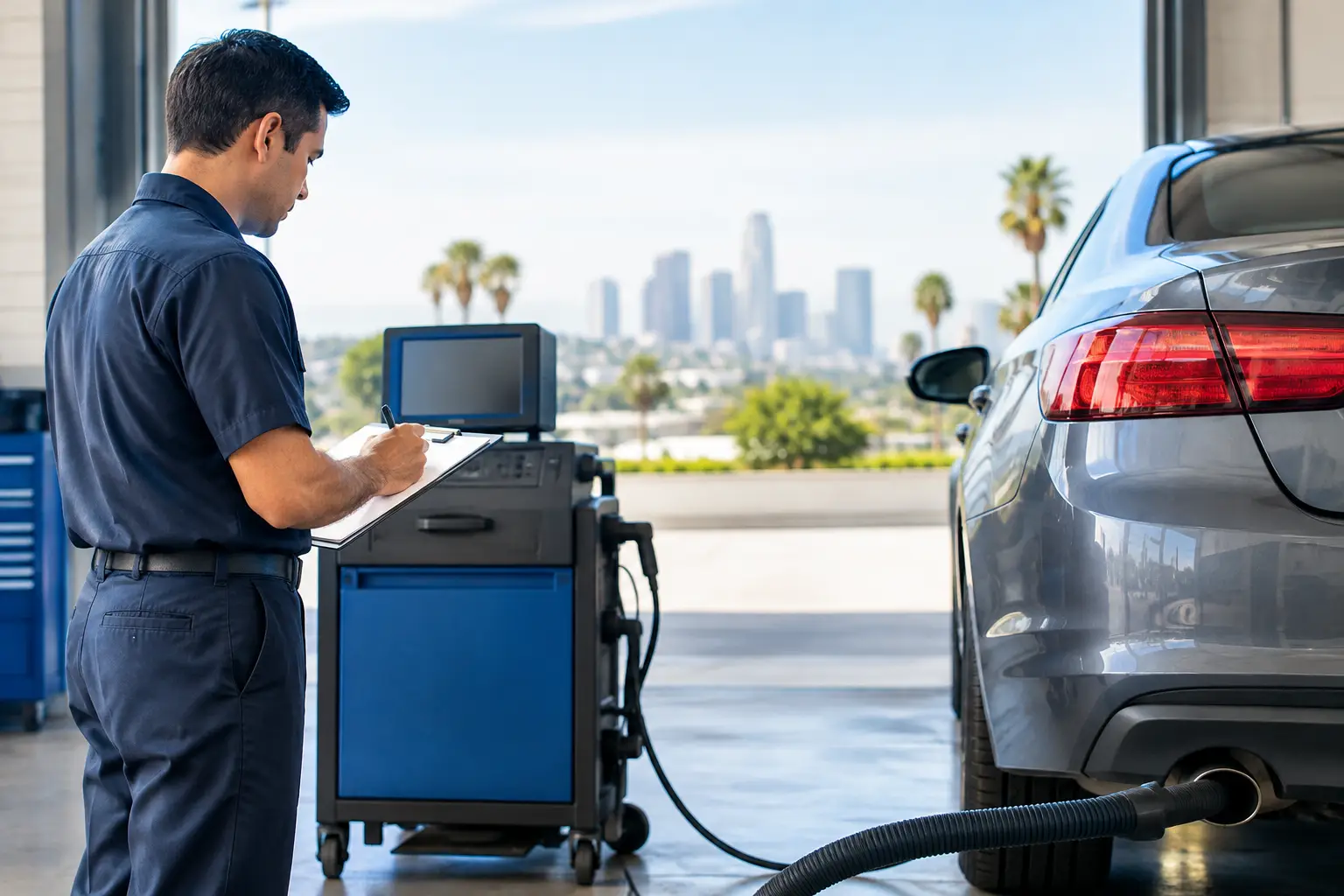
A California smog test cost is rarely just one number. The test itself may be straightforward, but the total amount you spend can change based on your vehicle, the type of station required, whether the vehicle passes, and what the DMV is asking you to complete. For owners facing a registration deadline or a failed inspection, understanding those moving parts before authorizing repairs can prevent expensive wrong turns.
What Makes Up the Smog Test Cost in California
California does not set one statewide retail price for a smog inspection. Individual stations set their own testing prices, so a low advertised price may not reflect every charge that appears on the final receipt. The location, vehicle type, station designation, and any required certificate fees can all affect what you pay.
The inspection charge is the station's fee for performing the test and transmitting the result. If your vehicle passes, a certificate of compliance is generally sent electronically to the DMV. State-related certificate charges may apply in addition to the station's inspection price. Ask for the total out-the-door price before the test begins, especially if an advertisement highlights a price that appears unusually low.
Some vehicles must be tested at a STAR-certified station. A DMV registration notice may direct you to a STAR station, or a vehicle may need one because of its prior testing history. STAR testing can cost more than testing at a station without that requirement, but using the wrong type of station can mean paying for a test that does not satisfy the DMV requirement.
For most eligible vehicles, the smog requirement comes up during biennial registration renewal. It can also apply when ownership changes or when a vehicle is brought into California from another state. The registration notice and the vehicle's DMV record are more reliable than assumptions based on the car's age or condition.
Typical Smog Test Cost Scenarios
A vehicle that passes on the first visit usually has the simplest cost: the inspection fee plus applicable state charges. The situation becomes more complicated when a car fails, has an unresolved check engine light, or needs a STAR test.
A failed test does not mean the vehicle is unsafe to drive, and it does not automatically mean a major repair is necessary. It means the vehicle did not meet the emissions-related requirements measured during that inspection. The report should identify the failure area, such as excessive emissions, an emissions-control component problem, an onboard diagnostic issue, or an incomplete readiness monitor.
Modern vehicles are often evaluated through the onboard diagnostic system. A check engine light can cause an automatic failure, but turning the light off without correcting the underlying fault is not a dependable solution. If the system detects the same issue again, the light may return. Clearing codes immediately before a test can also leave readiness monitors incomplete, which may lead to another unsuccessful inspection.
Older vehicles may require more investigation. The concern could involve ignition components, fuel delivery, vacuum leaks, the catalytic converter, sensors, or other emissions-control parts. The lowest repair estimate is not always the best value if it addresses a symptom without confirming the cause of the failure.
Questions to Ask Before Paying for Repairs
When a smog inspection fails, the next expense is often less predictable than the test fee. Before approving work, request a written estimate and make sure the shop has reviewed the actual failure report. A clear conversation can help you compare a reasonable repair path with other compliance options.
Ask these questions before moving forward:
- What specific test result or diagnostic code caused the failure?
- Is the estimate for diagnosis, repair, or both?
- Are replacement parts appropriate for California emissions requirements?
- What happens if the recommended repair does not resolve the failure?
The answer may depend on the vehicle's condition, mileage, market value, and how long you intend to keep it. Spending a modest amount to correct a verified issue can make sense for a reliable vehicle. Spending thousands on an aging vehicle with several unresolved mechanical problems may not. The right decision is financial as well as regulatory.
Keep all inspection reports, diagnostic results, invoices, and repair records. They can be useful if you need to show what steps have already been taken, explore available assistance, or evaluate whether the vehicle qualifies for a retirement pathway. Documentation also reduces confusion when more than one shop or agency is involved.
When Retesting Adds to Your California Smog Test Cost
A retest is another potential cost, but station policies vary. Some stations offer a reduced-price retest within a defined period after repairs, while others charge a new testing fee. Do not assume a free retest is included. Ask about the policy before the first inspection and confirm whether it applies only to repairs performed at that business.
Timing matters as well. If repairs involve disconnecting the battery, replacing certain components, or clearing diagnostic codes, the vehicle may need to be driven through normal operating conditions before all readiness monitors reset. Going back too soon can result in an incomplete-monitor result and another testing expense.
Avoid treating a smog test as a last-minute DMV errand. Starting early gives you time to review a failure, obtain a second repair opinion if needed, complete a proper drive cycle, and retest before registration deadlines become more stressful. A vehicle can still require a passing result even if you have already spent money on repairs.
Repair, Assistance, or Retirement: Choosing a Practical Path
For qualifying California owners, repair assistance or vehicle retirement programs may be worth reviewing before committing to costly work. Eligibility can depend on income, registration status, the vehicle's test results, ownership details, and other program conditions. Availability and requirements can change, so a program should be reviewed as a possible route, not treated as guaranteed funding.
Vehicle retirement is not simply dropping off an old car. The vehicle and owner typically must meet program requirements, and the paperwork must be completed correctly. Registration status, title issues, missing documentation, lien concerns, and failed-test records can all affect the process. Retiring a vehicle may be a better fit when repair costs exceed the vehicle's practical value, but it is a permanent decision.
If you are weighing repair against retirement, start with the facts: the reason for the smog failure, the vehicle's estimated repair needs, its current condition, and your registration deadline. SoCal Smog Retirement & CARB Testing helps California owners review these details and understand the next steps before they commit money to a path that may not fit their situation.
How to Avoid Unnecessary Smog Expenses
The most useful way to control cost is to verify the requirement before scheduling a test. Review the DMV notice, confirm whether STAR certification is required, and make sure the vehicle is due for testing. If the check engine light is on, address that issue before paying for an inspection rather than hoping the vehicle will pass.
Call ahead for a complete price, not just an advertised test price. Confirm whether certificate charges are included, whether coupons have restrictions, and how much a retest would cost if the vehicle does not pass. If your car recently had repairs or its battery was disconnected, ask a qualified repair professional whether readiness monitors are likely complete.
A smog test is often the final checkpoint in a larger registration process. Giving yourself time to understand the result, gather records, and choose between repair or retirement can turn a frustrating expense into a clear next step.